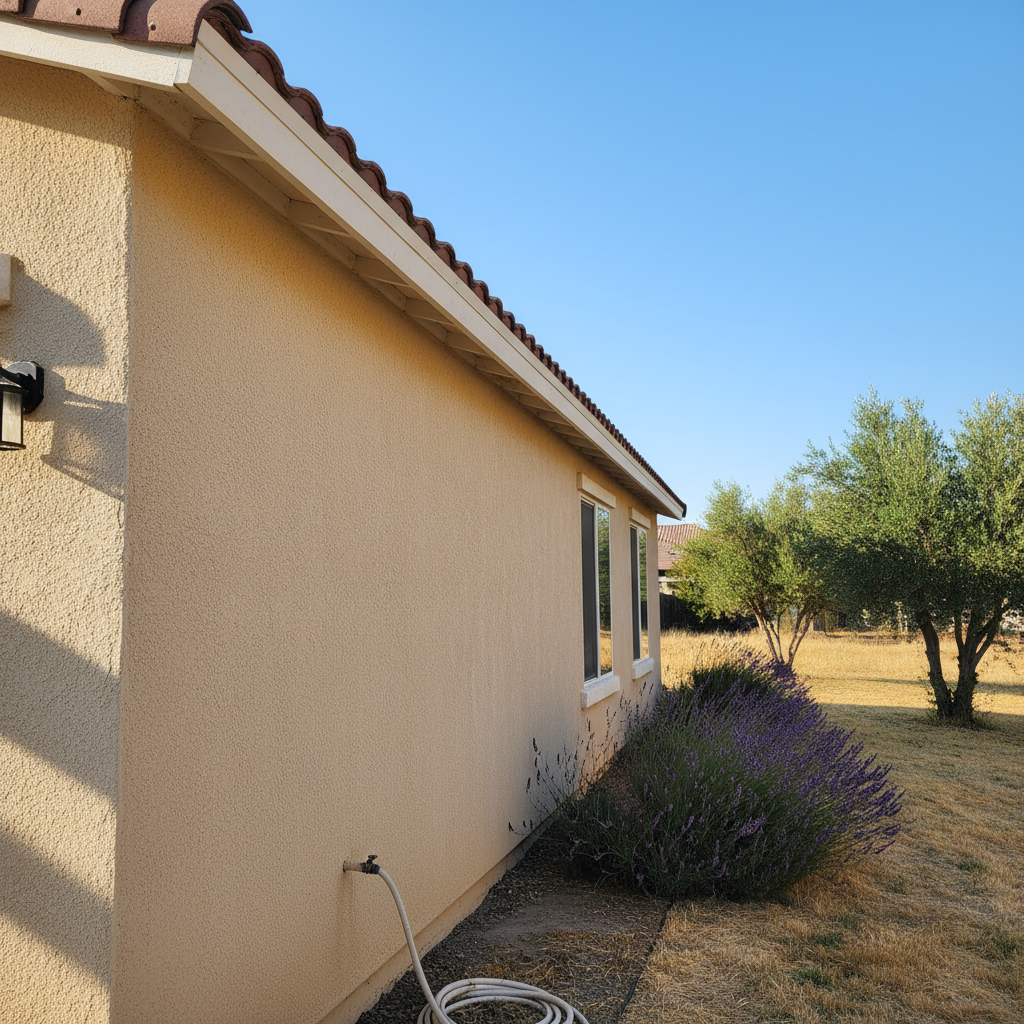
That intense Clovis summer sun does a lot of damage to everything it touches, and your home exterior walls take the brunt of it. If you have lived out here near Old Town or up toward the Harlan Ranch area for more than 2 to 3 years, you already know how fast our dry heat and dramatic temperature swings can test building materials. Stucco is very tough, but stucco is not completely bulletproof. Left unattended, our intense climate will find any tiny weakness and turn it into a major problem.
Extending the life of your stucco starts with understanding what stucco is dealing with out here in Clovis, CA. We get months of unbroken sunshine, zero humidity for large stretches, and then sudden winter dampness rolling off the valley fog. That expansion and contraction cycle puts stress on the finish coat for stucco. The best thing you can do to protect your investment is to keep water away from where water should not be. Stucco handles dry heat very well, but trapped moisture combined with shifting soil conditions can lead to stucco cracks faster than you would think.
What Regular Maintenance Actually Looks Like
Homeowners do not need to spend every weekend babying their exterior walls. Stucco is supposed to be low maintenance, which is why most people around Clovis chose stucco in the first place. But doing nothing for 10 years is a fast track to an expensive repair bill.
- Walk your property line twice a year and look closely at the walls, especially under the roof overhangs and near the ground line where sprinkler spray hits.
- Wash down the dust and dirt every spring using a standard garden hose with a nozzle—skip the high-pressure industrial power washer unless you want to blast away the finish coat.
- Check your window and door caulking annually because dry air shrinks sealant, and gaps right around the frame are where water sneaks in during winter storms.
- Keep shrubs and tree branches trimmed at least a foot away from the house so they are not scratching the surface or trapping humidity against the wall.
Warning Signs That Demand Attention
Hairline stucco cracks happen. Hairline cracks are normal as a house settles into the clay-heavy soil we get around Fresno County. But when those little lines start growing, you need to pay attention.
If you see a crack wider than a credit card, or if you notice spiderweb cracking spreading across a whole panel, that is your wall telling you something is wrong underneath. Another red flag is discoloration or dark stains that stay damp long after it rains—that usually means moisture is getting trapped behind the barrier. Pay close attention around your irrigation heads, too. If a sprinkler head is hitting the base of your wall every day, you will eventually see efflorescence, which is that white powdery substance pushing through the surface as salts dissolve and migrate.
Bulging or spongy spots are the ones that should really make you nervous. If you press on the stucco near a window corner or roofline and it feels hollow or gives way slightly, stop what you are doing and take pictures.
When to Call in the Professionals
There is plenty a homeowner can handle on a Saturday morning, but some jobs require actual trade experience. Minor hairline cracks can usually be sealed with a bit of elastomeric patch if you are handy, but anything structural needs a real set of eyes.
Clovis Stucco & Plastering gets calls all the time from people who tried to patch a major crack with hardware store caulk only to watch the damage spread wider the following season. If you have crumbling corners, extensive bubbling in the finish coat, or water stains that keep growing, it is time to bring in a professional. Catching these structural issues early means our team can patch and re-mesh a small section instead of tearing off an entire wall. Keep up with the basics, watch for the warning signs, and your home will stay solid through decades of Central Valley weather.