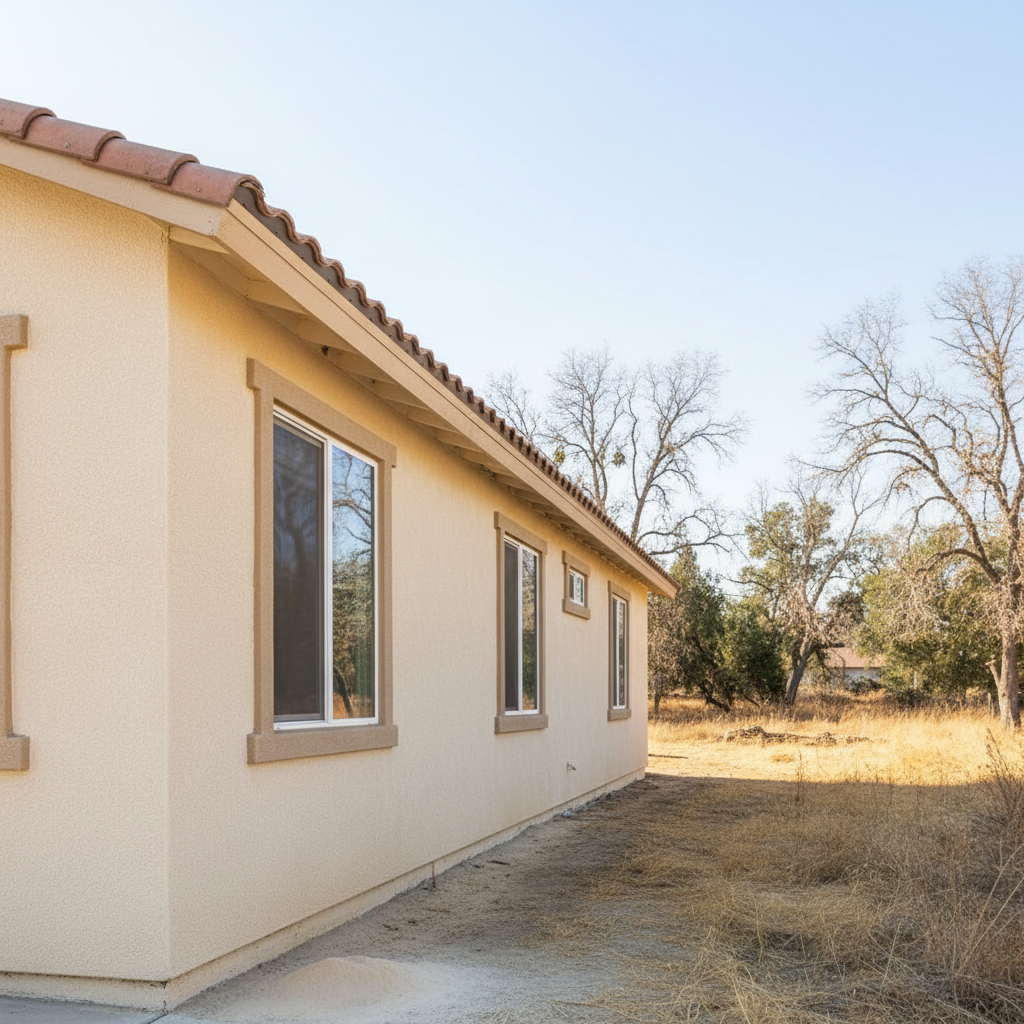
Alright, let's talk about EIFS – that's Exterior Insulation and Finish Systems. Maybe you're thinking about it for a brand-new house, an addition, or you're just curious what it takes to get this material on your home right here in Clovis. It's a really good system, offers fantastic insulation, and can look super sharp. But what's it actually going to cost you?
I've been in this business a long time, and I've seen plenty of projects around here. We've worked on everything from the newer homes off Temperance to older remodels closer to Old Town Clovis. When people ask me about EIFS pricing, they usually want a quick number. But honestly, it's never that simple. A few big factors really make the price go up or down.
What Makes EIFS Installation Costs Change?
You can't just throw out a "per-square-foot" number and expect it to be right for every single job. Here's what we always look at:
The Size of the Job: This one's pretty obvious, right? More square footage means you need more material and more people working. A small accent wall will be way cheaper than wrapping your whole two-story house.
System Type & Thickness: EIFS isn't just one thing. There are different types of systems; for example, drainage systems are often the preferred choice, and for good reason, especially with our occasional heavy rains. You also get to pick how thick the insulation board is. Thicker insulation means a better R-value, but yeah, it also means more expensive materials. Standard insulation is usually around 1-2 inches thick, but you can go thicker if you're really aiming for top-notch energy efficiency.
Architectural Complexity: This is a huge factor. Is your home basically a simple box? Or does it have a bunch of corners, bump-outs, arches, decorative bands, or other intricate details? Every single corner, every window, every door opening adds to the labor. Cutting and shaping the insulation and finish coats around these features takes both time and skill. A really complex design can easily double the labor hours compared to just a flat wall. It's wild, isn't it?
Scaffolding & Access: How easy is it for us to get to the walls? If we need a lot of scaffolding, especially for a multi-story home or if the ground isn't level, that's an extra cost. We have to make sure our crew is safe, and setting up and moving scaffolding definitely isn't free.
Existing Substrate Prep: What are we actually putting the EIFS over? Is it brand-new sheathing? Old siding that needs to be ripped off? Do we need to repair the existing wall at all? Sometimes we uncover dry rot or other issues once we start tearing things down, and we absolutely have to fix those surprises before we can put up the new system.
Finish Type & Texture: EIFS gives you a huge range of finishes. You can go with smooth, sand, coarse, or even something that looks like brick or stone. More intricate or specialized finishes often cost more, both in materials and in the time it takes to apply them.
Typical EIFS Cost Ranges in Clovis
Alright, let's get down to some actual numbers, but please remember these are just estimates. For a typical home in Clovis, you're usually looking at a range of $10 to $18 per square foot for EIFS installation. That price covers the finished wall surface, not just the materials. It includes labor, materials, and all the necessary parts for a complete, properly installed system.
Basic, straightforward job: Think simple walls, not many architectural features, standard insulation thickness. You'll probably be closer to the $10-$12/sq ft mark here.
Average home with some features: Most homes fit into this category. A few windows, some corners, maybe a decorative band or two. This is where you'll see prices in the $13-$15/sq ft range.
Complex designs, high-end finishes, or difficult access: Lots of architectural details, thicker insulation, specialized textures, or extensive scaffolding. For these, you could be looking at $16-$18+/sq ft.
So, for a 2,000 square foot home with, let's say, 1,500 square feet of exterior wall surface getting EIFS, you might be looking at anywhere from $15,000 to $27,000. It's a pretty big investment, sure, but it's one that usually pays off in energy savings and how good your house looks.
What Should a Quote Actually Include?
When you get a quote from us at Clovis Stucco & Plastering, or from any reputable contractor, it shouldn't just be one single number. You really want to see a breakdown. Here's what you should expect:
Detailed Scope of Work: Exactly which areas are being covered? What's getting removed? What kind of prep work is part of the deal?
EIFS System Specification: What specific type of EIFS system (like a drainage type)? How thick is the insulation? What brand of materials are they using?
Finish Details: What texture and color are you getting? Be specific!
Labor Costs: Often, this is rolled into the per-square-foot price, but it should be clear that labor is included.
Material Costs: All the components, from the adhesive right down to the final finish coat.
Permits & Inspections: Who's responsible for pulling the necessary permits? This is absolutely crucial for EIFS, as it requires proper installation and inspection.
Warranty Information: What kind of warranty do they offer on their workmanship and on the materials themselves?
Payment Schedule: How and when are payments due?
How to Avoid Paying Too Much for EIFS
Nobody wants to get ripped off, right? Here's my best advice:
Get Multiple Bids: Don't just go with the first guy who gives you a number. Get at least three detailed quotes. This helps you compare apples to apples and really understand the going rate for your specific project.
Ask for References & Actually Check Them: A good contractor will have happy customers. Call them up, ask about the quality of the work, if they finished on time, and how their communication was.
Verify Licenses & Insurance: Make sure the contractor is properly licensed and insured. Seriously, don't risk it. If they're not, you could be on the hook if someone gets hurt on your property.
Don't Automatically Go for the Lowest Bid: The cheapest bid often means corners are being cut – either with the materials, the labor, or the right installation techniques. EIFS is a system; if one part isn't done right, the whole thing can fail. You'll end up paying more in the long run fixing problems.
Understand the Warranty: A solid warranty really gives you peace of mind. Know what's covered and for how long.
Communicate Clearly: Make sure everything you've talked about is written down in the contract. No surprises later, please!
EIFS is a fantastic exterior system, but only when it's done correctly. It's not the cheapest option up front, true, but the energy savings and durability can make it a really smart investment for your Clovis home. Just do your homework, ask the right questions, and pick a contractor who truly knows their stuff.