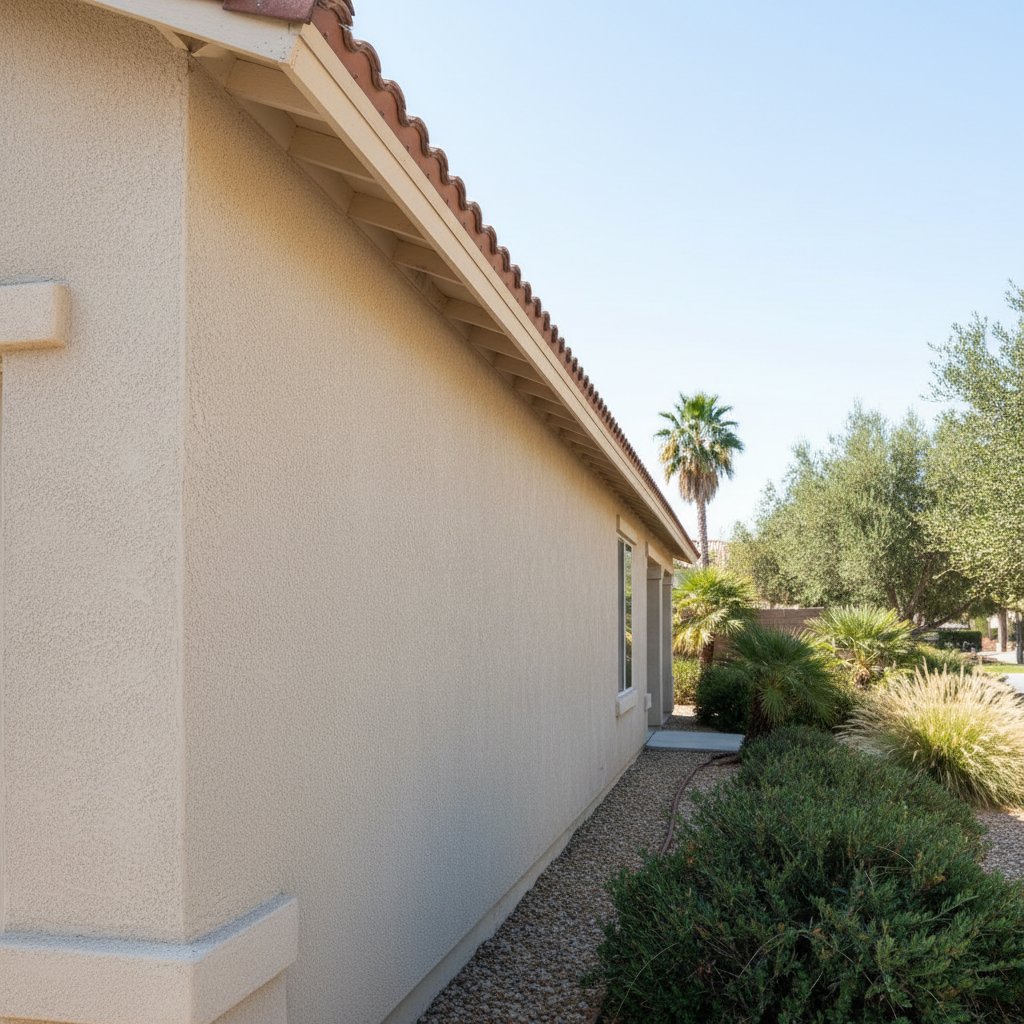
Alright, let's talk about stucco maintenance. You've got it on your house, and you want it to last, right? Good. Because a little bit of smart upkeep goes a long, long way, especially here in Clovis with our hot summers and those occasional heavy rains that can really test a home's exterior.
Extending Your Stucco's Life: It's Not Rocket Science
The biggest thing you can do to extend your stucco's life isn't some fancy treatment; it's just plain common sense. Keep water away from it. Seriously. Stucco is tough, but it's not waterproof. It's built to shed water, not soak it up. Any place water sits or gets trapped, you're asking for trouble down the line.
Think about your sprinklers for a moment. I see this all the time in neighborhoods like Loma Vista or around Old Town. Folks have their sprinklers set to drench their foundation and the bottom few feet of their stucco every morning. That's a huge no-no. Adjust those heads so they're watering your plants, not your house. Constant moisture at the base promotes efflorescence (those white powdery stains) and can eventually lead to cracking and delamination. Nobody wants that, do they?
Another big one? Your gutters and downspouts. Make sure they're clean and draining properly, directing water well away from your foundation. If a downspout is dumping water right next to your wall, you're just asking for moisture issues. Get an extender on there. It's a cheap fix that saves you thousands later.
Regular Maintenance: What You Should Be Doing
You don't need to be out there every weekend, but a little routine inspection and cleaning can prevent small issues from becoming big, expensive headaches. Here's what I tell my clients:
- Annual Inspection: Walk around your house once a year, maybe in the spring after the winter rains. Look closely at all the stucco surfaces. Are there any new cracks? Any discoloration? Pay extra attention around windows, doors, and where different materials meet. Those are often the first places problems show up.
- Cleaning: Stucco gets dirty, especially with our Central Valley dust and pollen. A gentle wash with a garden hose and a soft brush can do wonders. For tougher grime, you can use a mild detergent solution (like dish soap and water). Don't go crazy with a high-pressure washer; you can damage the finish or force water into places it shouldn't be. A gentle rinse is usually all you need.
- Caulking Check: This is crucial. All those joints where stucco meets trim, windows, doors, or other materials need to be sealed with good quality, paintable caulk. Over time, caulk dries out, shrinks, and cracks. Check these areas annually and re-caulk as needed. It's a simple DIY job that's incredibly effective at keeping water out.
- Trim and Flashing: Make sure any wood trim, fascia, or metal flashing is in good shape and properly installed. If water is getting behind these elements, it can wick into the stucco and cause problems you won't see until it's too late.
Warning Signs: What to Look For
Your stucco will usually tell you when it's unhappy. You just need to know what to listen for (or look for, in this case). Don't ignore these:
- Cracks: Hairline cracks are pretty common and usually not a huge deal, especially with our temperature swings. But if you see cracks that are wider than a credit card, or if they're running in a spiderweb pattern, or if they're horizontal and stepping up or down, that's a red flag. Those can indicate structural movement or serious moisture intrusion.
- Stains and Discoloration: Dark streaks, especially below windows or along the foundation, often mean water is getting in somewhere. White powdery stuff (efflorescence) means moisture is moving through the stucco and leaving mineral deposits behind. Green or black patches could be mold or mildew, also a sign of persistent moisture.
- Bulging or Soft Spots: If you push on the stucco and it feels soft, spongy, or you hear a hollow sound, that's bad news. It means the stucco has likely delaminated from the wall sheathing, and there's probably moisture trapped behind it. This is a big one.
- Peeling Paint: If your stucco is painted and the paint is peeling or bubbling, it's often a sign of moisture trying to escape from behind the stucco.
When to Call a Professional
Look, I'm a contractor, so you might think I'd say