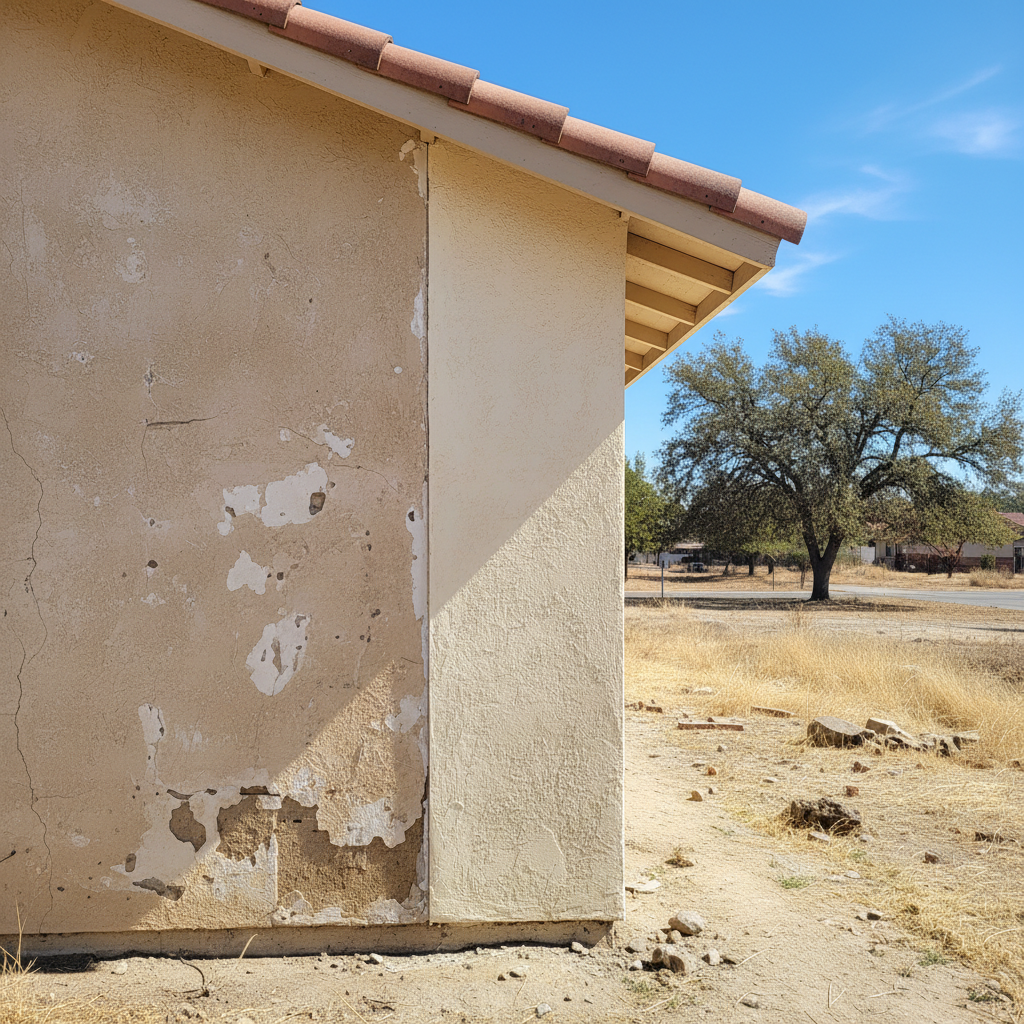
Alright, let's talk stucco. If you're thinking about putting new stucco on your house here in Clovis, or maybe re-stuccoing an older place, you've probably heard a couple of terms tossed around: 'traditional stucco' and 'EIFS'. So, what's the real difference between these two, and which one actually makes sense for your home? I've been doing this work for a long time, and I've watched both systems go up and seen how they hold up over the years, especially with our scorching summers and the occasional heavy rain we get.
What's Traditional Stucco?
When most folks picture stucco, they're usually imagining traditional stucco. It's been around for centuries, and there's a good reason for that longevity. It's a cement-based product, typically a blend of Portland cement, sand, lime, and water. We put it on in multiple layers over a wire lath, which gets attached to your wall sheathing. The first couple of layers are called the scratch coat and brown coat, and then the final layer is your finish coat – that's what gives it its color and texture.
Think about those classic, solid homes in neighborhoods like Old Town Clovis, or even some of the older spots out by Peach and Nees. Chances are, they're sporting traditional stucco. It's tough, it breathes, and it's definitely got a proven track record.
What's EIFS?
Now, EIFS stands for 'Exterior Insulation and Finish System.' It's a bit newer on the scene, especially for houses, though it's been a big deal in commercial buildings for quite a while. Don't mix it up with that old synthetic stucco from years ago that caused all those water intrusion headaches; modern EIFS is a completely different animal, with drainage planes and much better installation methods.
EIFS starts with an insulation board, usually expanded polystyrene (EPS), which we either glue or mechanically fasten to your exterior sheathing. Over that, we put a base coat with a fiberglass mesh embedded in it for strength, and then a final acrylic finish coat. The big difference here is that insulation layer. That's why they call it an 'insulation and finish system,' after all.
Cost: What You Pay Now vs. Later
Let's get down to the nitty-gritty: cost. Generally speaking, traditional stucco tends to be a bit cheaper to install upfront. The materials are usually less expensive, and while it takes a lot of labor, the process is well-established. You're basically paying for solid, durable layers of cement.
EIFS can sometimes have a higher initial installation cost. Those insulation boards, specialized adhesives, and acrylic finishes can really add up. However, you're getting that insulation benefit built right into your home's exterior. For homes in Clovis, where we're running the AC for months on end, that extra insulation can actually mean real savings on your energy bills down the road. So, while the sticker price might be a little higher, your long-term operational cost could actually be lower. Something to consider, right?
Durability and Maintenance
This is where things get interesting. Traditional stucco is incredibly durable. It's hard, it handles impacts pretty well, and it's not going to dent or puncture easily. If it does crack (and all stucco can crack eventually, especially with our expansive clay soils here that can shift a bit), repairs are usually pretty straightforward. You can patch it, re-dash it, or even paint it.
EIFS is also durable, but in a different way. Because of that softer insulation board underneath, it's more prone to impact damage. A baseball hitting the wall, or even a hard bump from a lawnmower, can create a dent or a hole. The good news is that the acrylic finish coats are very flexible, which means they're less likely to get those tiny hairline cracks than traditional stucco. When EIFS does get damaged, repairs can sometimes be a bit more involved to blend seamlessly, particularly if the insulation board itself is compromised.
Maintenance for both mostly means keeping them clean and fixing any cracks or damage quickly. For EIFS, you'll want to be a bit more careful about impacts. For traditional stucco, just keep an eye on those hairline cracks and seal them up before water can get in there.
Appearance and Aesthetics
Both systems can give you a beautiful finish, but there are some subtle differences. Traditional stucco has that classic, hard, masonry look and feel. You can get a huge range of textures, from smooth to sand finish to heavy lace. The colors are typically mixed right into the final coat, giving you a consistent, earthy tone.
EIFS, with its acrylic finish, can offer an even wider palette of colors and a very consistent, often smoother, appearance. The acrylic nature means it's less likely to fade over time compared to some traditional stucco pigments. You can also achieve some really intricate architectural details with EIFS that might be harder or more expensive to do with traditional stucco, thanks to how easy it is to shape the insulation board.
My Recommendation for Clovis Homeowners
So, which one should you pick for your place? For most homeowners in Clovis, I'd lean towards traditional stucco for a few key reasons.
First, it's a known quantity. We've got a ton of traditional stucco homes here that have truly stood the test of time, looking great for decades. It's incredibly robust, handles our climate well, and repairs are generally simpler and more cost-effective if something goes wrong. Given the potential for kids playing, bikes falling, or just general wear and tear, that impact resistance is a big plus.
Second, while EIFS offers great insulation, many homes in Clovis already have decent wall insulation. You can often get similar energy efficiency gains by upgrading attic insulation or windows, which might be a more cost-effective route than relying solely on EIFS for insulation benefits. If you're building a brand-new, super-efficient custom home, EIFS might make more sense, but for most existing homes or standard new builds, traditional stucco is a solid, reliable choice.
Now, don't get me wrong, EIFS is a good product when installed correctly, and it definitely has its place. But for the typical Clovis home, where you want a durable, low-maintenance, classic look that can take a beating and be easily repaired, traditional stucco is usually the way to go. It's what we've been doing for generations, and it just works. If you're still on the fence, give us a call at Clovis Stucco & Plastering. We can come out, take a look at your specific project, and talk through the options in more detail. We're here to help you get it right.